For the years after go-live.
A project ends. The software it produced doesn’t. Once a solution is in production you need it kept that way: someone reachable who already knows your system, and someone keeping the software current. Two services, split by what you’re running. A Forge deployment, or your own OPC UA application.
Enterprise Support
Your Forge deployment, kept running. Billed monthly.
Base product maintenance keeps your Forge licenses current. Enterprise Support is the tier above it: an ongoing managed service for a Forge deployment your operation now depends on, paid monthly instead of bought as a project. It answers questions about your deployment, its integrations, its models and its quirks, not just about the product.
What it includes
Agreed response times with a defined escalation path.
A named contact who knows your architecture, so you're not re-explaining it each time.
Case tracking: what's been raised, what recurs, and what the pattern is telling you.
Forge updates applied as part of the service, not left for you to schedule.
A periodic review of the deployment: version currency, certificate expiry, capacity, and what's worth fixing before it breaks.
Reserved expert capacity, so an urgent problem doesn't wait behind a project.
Who it's for
Organizations running Forge as infrastructure, not as a one-off project. Several sites, several integrations, a real cost when the data stops. If you have one server in one plant, base product maintenance is the right level, and we’ll tell you so.
We at Hoval are pleased to share our positive experience working with Prosys OPC. Throughout our collaboration, Prosys OPC has provided valuable technical expertise and support that have significantly enhanced our system’s performance.
Hannes Karlbauer, Software Developer, Hoval Aktiengesellschaft
Software Maintenance
The application still runs. The people who wrote it have moved on.
That’s the usual starting point, and it’s more common than anyone admits. An OPC or OPC UA application that’s been in production for years, still working, and nobody in the building knows how. The original developers have left, the documentation is a wiki page from 2016, and the next OS upgrade is on the calendar. But it isn’t only about old code. An application we built for you last year needs the same dependency updates, security patches and defect fixes. We take on both, whether we wrote it or not.
What we do
Take-over review
We read the code, get it building again, and write down what it actually does. Usually the first document of its kind for that application.
Keep it running
Current Java and .NET runtimes, current operating systems, renewed certificates, dependency and security updates.
Fix and extend
Defect fixes and small, contained additions, not a rewrite you didn’t ask for.
Plan the road ahead
A version and update roadmap, and a straight answer on when replacement becomes cheaper than maintenance: migrating from OPC Classic (DA, AE, HDA) to OPC UA, moving onto a supported SDK, or a configuration-based replacement with Forge.
Cyber Resilience Act: the part that starts now
The CRA’s reporting obligations apply from 11 September 2026, and they reach products already on the EU market, not only what you place there in future. Full application follows on 11 December 2027. An application nobody maintains is hard to report on, because reporting assumes you know what’s inside it.
The obligations are the manufacturer’s, and we don’t discharge them for you. What we do is make them possible to meet: a dependency inventory and SBOM for the software we maintain, a clear escalation path to us when a vulnerability turns up in a component, preserved build and version records, and the technical input your own reporting needs.
How it runs
Either a small annual agreement that keeps the application supported and someone reachable, or per-incident work when something breaks. Both start with the take-over review, because we won’t promise support for code we haven’t read.
Every step of the way
Our consulting services cover every aspect of OPC and OPC UA, including information modeling, system design, diagnostics, and much more. We support you through every life cycle phase, taking into account all the technical details while at the same time meeting all your long-term goals.
Key benefits of our Consulting Service
- Expertise in OPC UA. We guide you in implementing OPC UA accurately and efficiently, providing expertise at a high level.
- Simplified Navigation. We help you navigate the intricate landscape of OPC UA, making the progress more straightforward.
- OPC Foundation Partners. As long-term OPC Foundation partners, our knowledge and commitment are unparalleled.
Our offering for your OPC and OPC UA consulting needs
- Requirements Analysis and Specification
- Design Descriptions
- System Design
- Software Development
- Test Planning and Testing
- Documentation and Manuals
- Tools Selection
- Technology and Standards Advice
- Architecture and Code Review
- Diagnostics and Troubleshooting
- System Configuration
Customer Cases
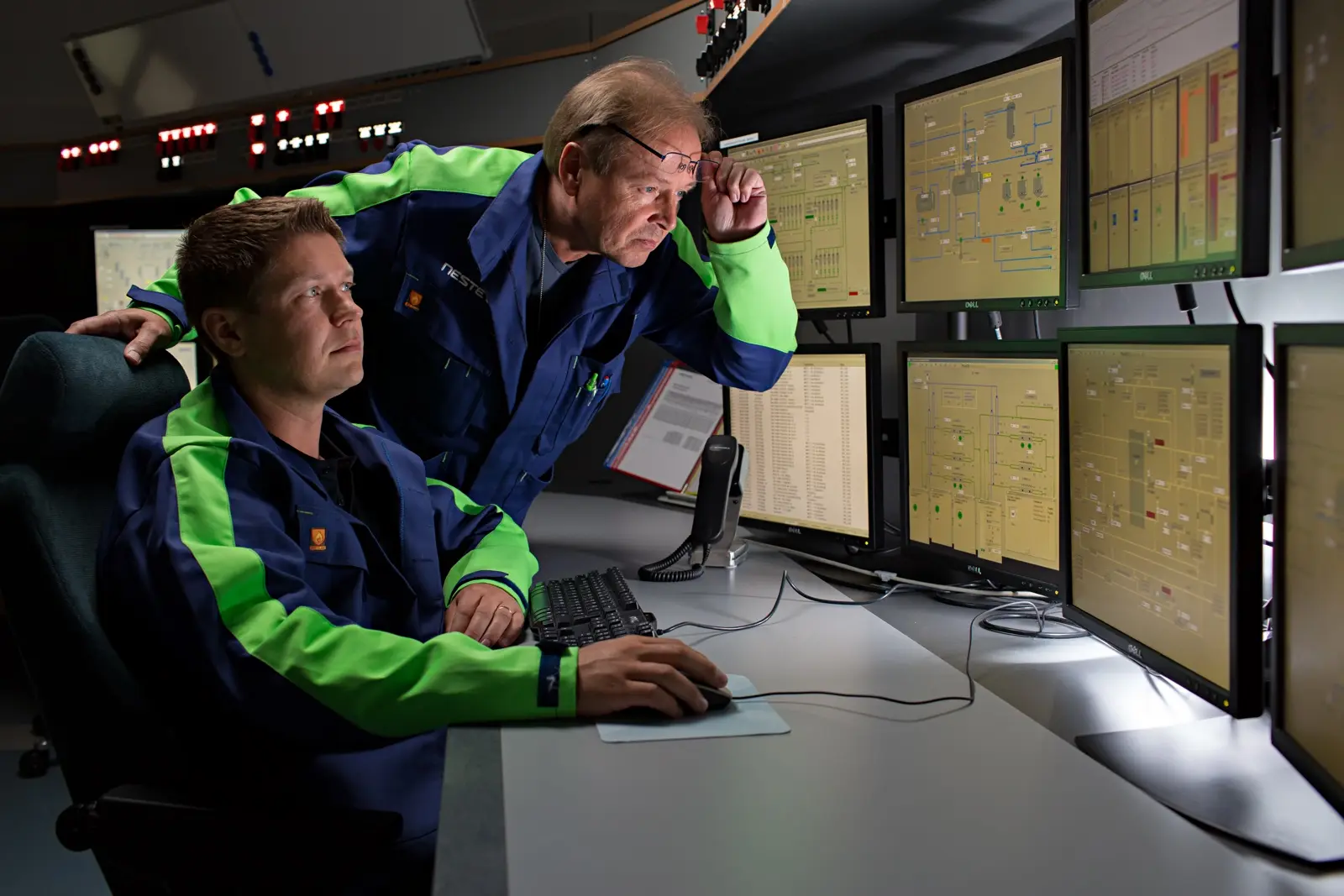
Neste - Communication Solution for Process Industry
Neste is the Nordic region’s leading provider of technology, engineering and project services for the oil and gas, bio refining, petrochemicals and chemicals industries, including also the utilities and life science sectors. Prosys OPC has worked with Neste to add the new OPC UA communication protocol to Advanced Process Control system and real-time process database. In another project Prosys developed hard control and alarm switch support for training simulator system using OPC UA.
No matter the scale of your needs or the timeline you’re working with, we provide tailored consulting services and partnership to suit your requirements.