We’re pleased to present our Forge Grafana Plugin, a free tool that brings OT data from Forge into IT dashboards via Grafana. It allows you to visualize real-time and historical OT data from Prosys OPC UA Forge directly in Grafana, the popular open-source dashboard platform.
Whether you’re already working with Forge or just exploring your options, the plugin offers a straightforward way to create visual dashboards for your OT data. You can read more on our Forge product page, and request a free evaluation through our evaluation request form.
An increasing number of users are integrating OT systems with IT monitoring tools. Grafana has become a preferred platform for dashboards thanks to its flexibility and widespread use in IT environments. At the same time, Forge has become a vital tool for managing OT data flows.
The idea for the plugin originated from a real-world need. Casa Mendes Gonçalves, a Portuguese food manufacturer, wanted to connect their OT data in Forge to Grafana dashboards. Their request echoed what we were already hearing from other users: the need for a simple, direct way to visualize OT data in Grafana. That insight became a feature—and now it’s available to everyone using Forge with OPC UA over REST Module.
What You Can Do With Forge Grafana Plugin
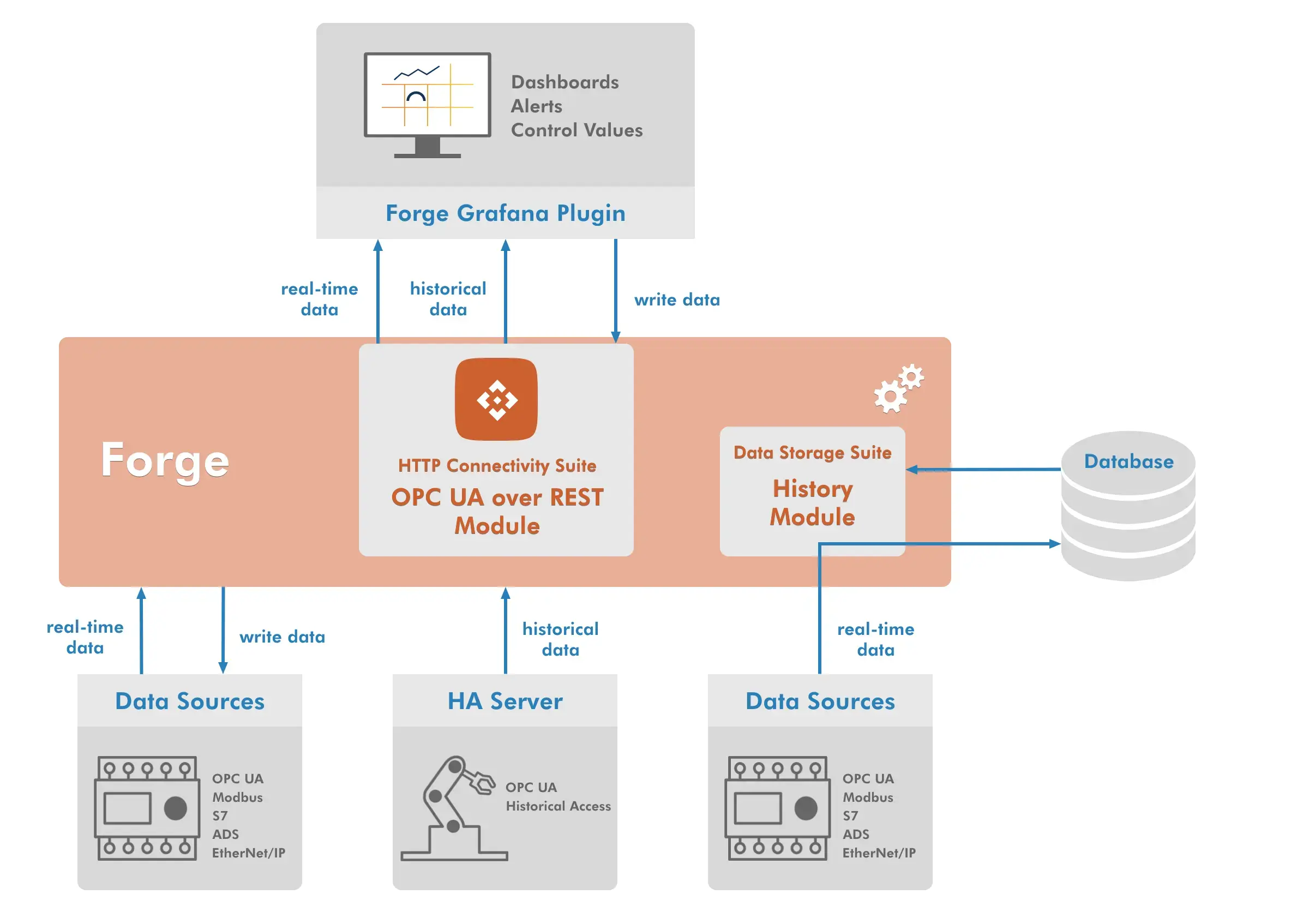
Forge Grafana Plugin lets you connect Forge to Grafana as a Data Source in just a few simple steps. As shown in the diagram below, the plugin connects to Grafana through Forge’s REST API. This allows you to query both real-time and historical OT data directly into your Grafana Dashboards. There’s no need to set up additional databases or handle MQTT payloads.
The plugin supports browsing Forge’s address space and OPC UA aggregate functions (Average, Minimum, Maximum, Range, Count, Start, End). It also makes it easy to select the engineering units and the range of the data. If these are set for the variable properties EngineeringUnits and EURange according to the OPC UA standard, they will be automatically detected. In addition, the browse name of the node is set to the signal’s label by default.
You can also use data from Forge to configure Grafana Alerts and write data values directly from dashboards. In addition, the plugin now runs in the backend instead of the web browser, delivering a significant improvement in performance and reliability.
Since the plugin leverages Forge’s built-in functionality, there’s no need to write custom connectors or work directly with OPC UA protocol details. The result: a quick and streamlined way to turn your OT data into actionable visuals.
Here’s how Forge Grafana Plugin connects through OPC UA over REST to access real-time and historical OT data.
Key Use Cases
Real-Time Monitoring Visualize live data from devices and systems for immediate insights or troubleshooting.
Devices Without Local Storage Use Forge with the Data Storage Suite to store incoming data, and let Grafana visualize the historical data directly through Forge.
OPC UA Servers with Historical Access Use Forge as a gateway to deliver historical data to Grafana via REST.
Alerting and Notifications Use Grafana’s alerting capabilities with data provided through Forge to monitor key values and trigger notifications when defined conditions or thresholds are met.
Control Values Use the write data functionality to send values from Grafana back to Forge and its underlying data sources. This allows users to adjust setpoints, control devices, and update process values directly from Grafana dashboards.
In all scenarios, the plugin simplifies your data flow by removing extra layers and letting you focus on building the visuals that matter the most.
How to Get Started
To use Forge Grafana Plugin, you’ll need:
Prosys OPC UA Forge with OPC UA over REST Module, included with HTTP Connectivity Suite.
Optional: History Module, included with Data Storage Suite for permanent and managed historical data.
A running Grafana instance or Docker environment
Installation Options
You can install the plugin in one of two ways:
Docker Image A ready-to-use Grafana instance with the plugin pre-installed.
ZIP Package For manual installation into an existing Grafana setup.
Creating Dashboards With Forge and Grafana
Forge Grafana Plugin gives you fast, no-code access to meaningful OT insights. With just a few clicks, you can connect your data from Forge to visual and alerting components in Grafana. No scripting or custom connectors required.
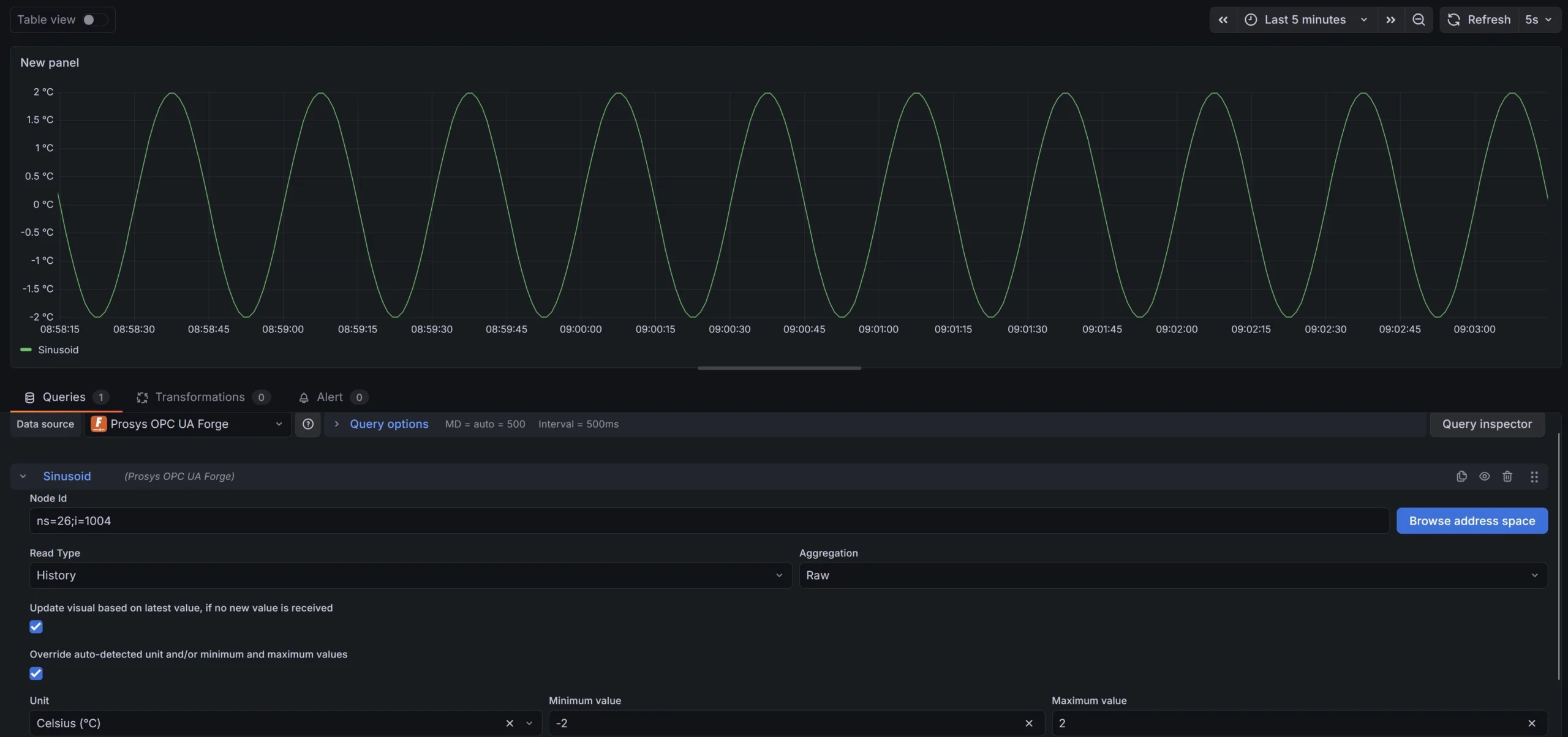
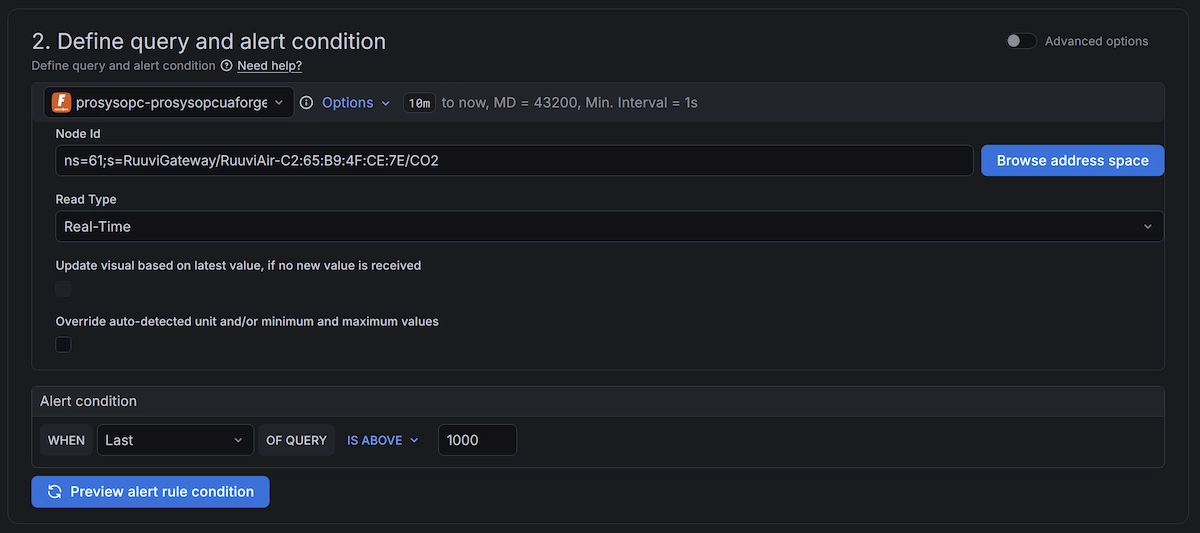
As you can see from the images below, the plugin offers a simple user interface where you can browse the node to read from Forge, and how it should be displayed in your dashboards. The measurement unit can be easily set or automatically detected, and the same with the range of the signal values.
Forge Grafana Plugin is extremely simple to use to visualize your data.
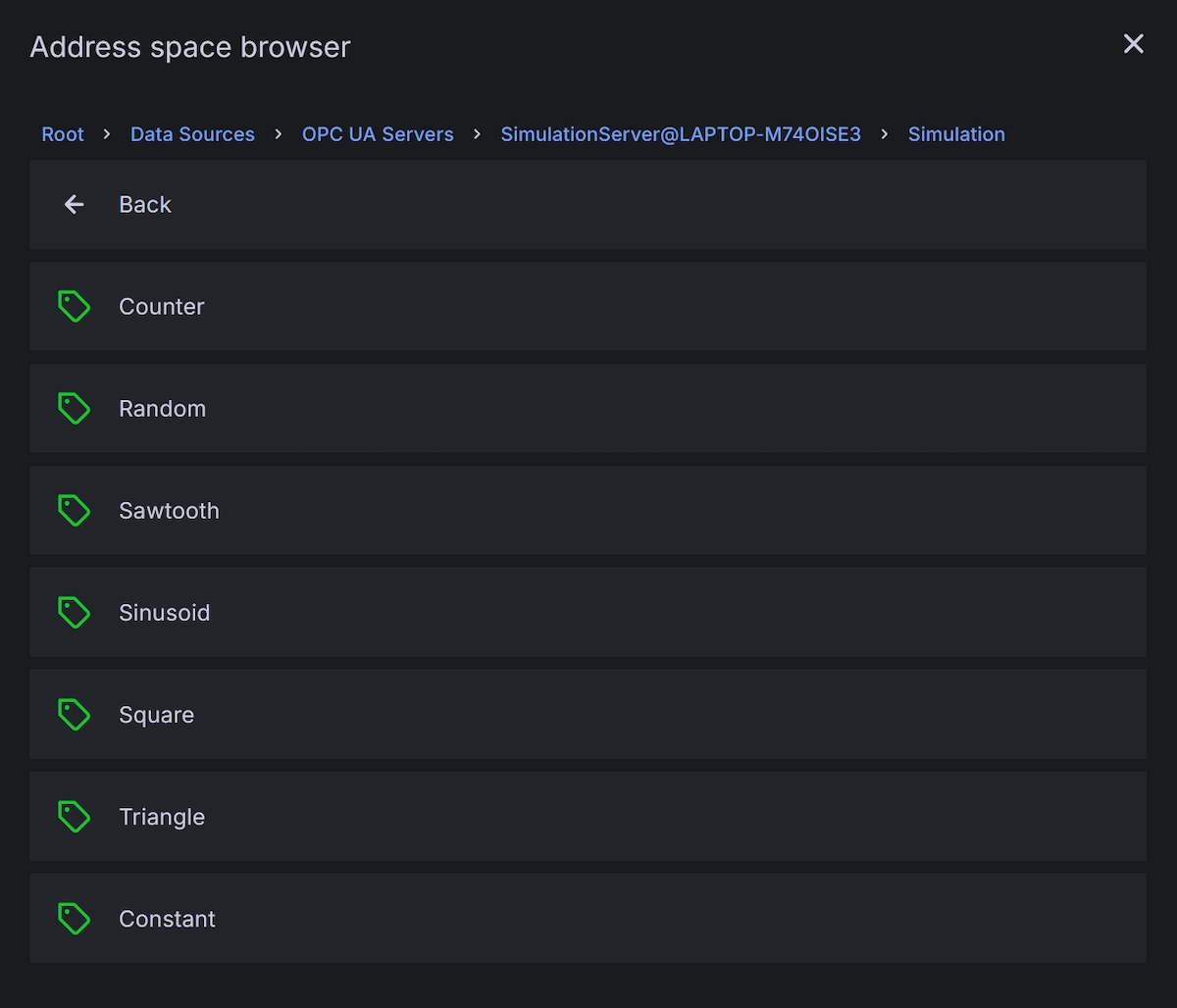
You can browse Forge’s address space for the variables you want to add to the Grafana dashboard. This is more convenient compared to copy pasting the NodeIds.
Browse nodes in the address space the same way as in the Forge UI
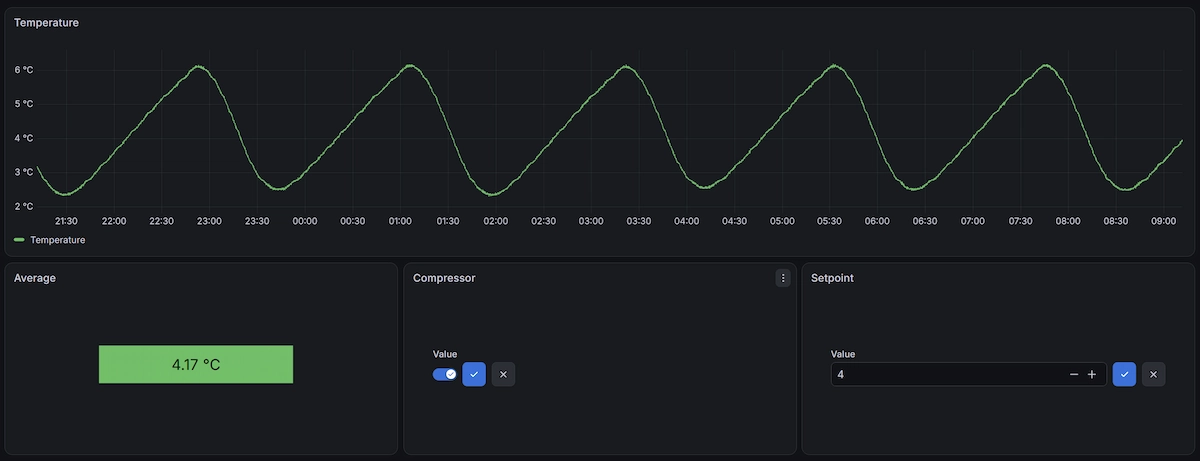
Forge offers unique capabilities to connect to OT data sources, and makes a solid match with Grafana. Whether you’re debugging device behavior or tracking long-term trends, Grafana dashboards powered by Forge help you stay on top of your data. Below, you can see our simple example dashboard with historical data at the top along with the average value and two control panels allowing users to write data to OT devices.
Use Grafana's different visualizations to present the data and create complete dashboards.
Grafana alerts allow users to send messages to a variety of destinations, such as email, Microsoft Teams, Slack, Telegram and Discord. Check out all available alert destinations here. The alert condition can be based directly on OT data provided through Forge, allowing users to monitor device values, process variables, and equipment states. For example, an alert can be triggered when a temperature exceeds a defined limit or a device enters a fault state. This makes it possible to create notifications based on real-time conditions in industrial processes and equipment. Both Forge and Grafana allow you to use expressions to combine values from multiple sources or define complex logic for an alert condition.
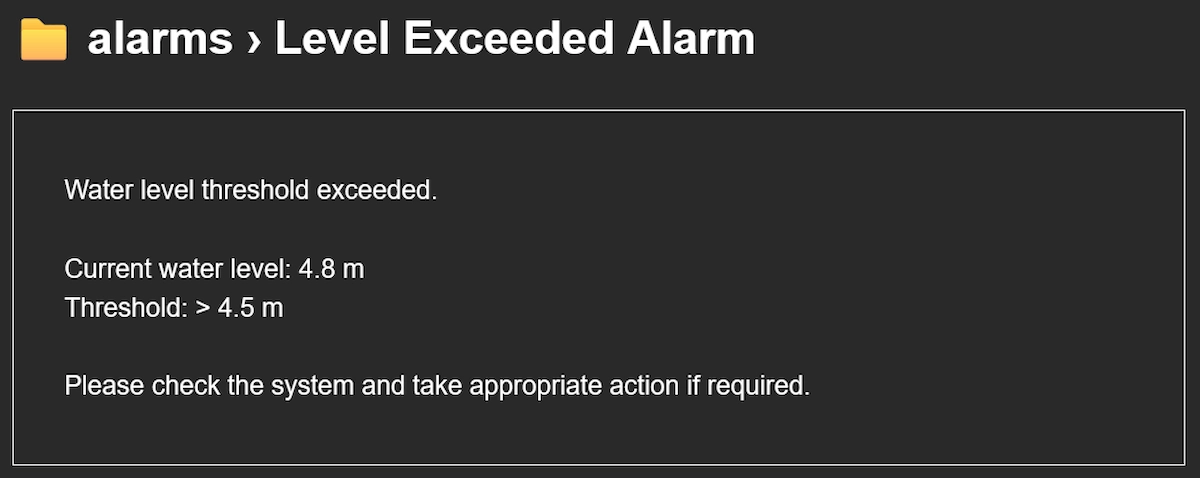
Grafana alerts can automatically send a notification to a destination of your choice when an alert condition based on Forge data is met.
Grafana alerts can be delivered through various notification channels, including email.
Ready to try it out?
Start visualizing your OT data and creating alert rules in Grafana with just a few clicks. Whether you’re monitoring live systems or digging into historical trends, Forge Grafana Plugin is free to use and easy to set up.
Already using Forge? Contact us to get the plugin files along with setup instructions for your preferred installation method: either a ready-to-run Docker image or a ZIP package. Once you’ve got everything in place, check out our step-by-step Grafana Plugin tutorial to go from installation to insights in minutes.
Prosys OPC UA Simulation Server and Browser 2026.2.0 introduce performance and security improvements, new Professional features, and a new Professional Bundle licensing model.
We have released a new version 1.4.0 of Prosys OPC UA Forge Grafana Plugin. The release brings new major features that improve usability and efficiency in a variety of usage scenarios.
We use cookies to improve your experience. Essential cookies are always enabled.
You can allow additional cookies for analytics and marketing below.
Cookie policy |
Privacy policy.